

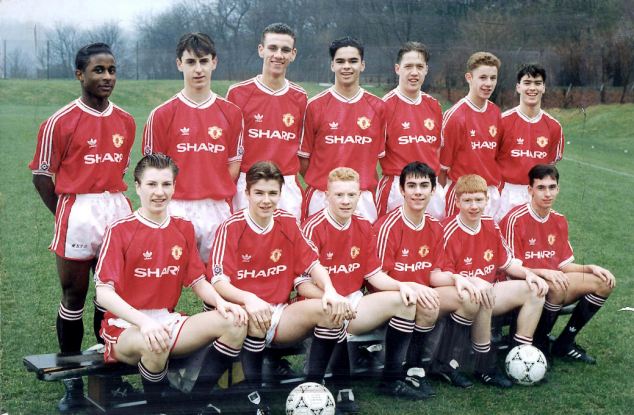
When people talk about Manchester United’s youth success, the Class of ’92 is usually the first reference point.
Those academy graduates became icons and helped define an era that shaped the club’s identity. Yet the fascination with that generation often overshadows an even more important reality. Manchester United’s academy has consistently produced elite professionals. It continues to guide young players into top-level football through a development model that is remarkably consistent, modern, and emotionally rooted in the club’s history.
Just as industries evolve and adapt to new regulations, such as the changing landscape of poker legal in the US, Manchester United’s academy has evolved with the times. While the club’s values remain rooted in tradition, it also embraces modern methods and innovation to ensure continued success.
The academy does not rely on nostalgia. It relies on structure, culture, and opportunity. That is why its success has lasted far beyond the Class of ’92 and why United still owns one of the strongest production lines in European football.
This article examines the foundations that make United’s academy elite, the philosophy that keeps it competitive, and the reasons it continues to shape world-class professionals in a football landscape that is more demanding than ever.
A Philosophy Built on Long-Term Development
Manchester United’s academy is not designed to produce quick results. It is built around long-term progression, a rarity in modern football. Many clubs focus heavily on short-term physical traits or immediate performance, but United consistently places value on technical ability, intelligence and character.
Three principles have guided the academy for decades:
This approach is why so many academy graduates, even those who do not make United’s first team, go on to successful professional careers elsewhere. They leave with football intelligence and maturity that translate across leagues and systems.
A Clear Pathway to the First Team
Opportunity is a powerful motivator, and Manchester United offers a realistic pathway that very few top clubs can match. The streak of naming at least one academy graduate in every matchday squad since 1937 is not a marketing line. It is a philosophy embedded in the club’s identity.
Young players at United do not feel like extras. They are treated as long-term investments. They see real examples of the pathway working right before their eyes.
Recent examples include:

These players became part of United’s senior environment after years of structured development. When first-team opportunities arrive, academy graduates are not overwhelmed. They are prepared for the pace, pressure, and mentality required.
Coaching That Promotes Intelligence, Not Just Athletics
One of the academy’s strengths is a coaching philosophy that prioritises decision-making and football understanding over pure physical traits. Young players are not drilled into rigid patterns. Instead, they are encouraged to solve problems on the pitch.
Coaches often highlight:
This is why United’s academy has consistently produced midfielders and attackers who are adaptable and tactically aware. It is also why technical players flourish in the system, rather than being overshadowed by early physical developers.
Investment in Modern Football Science
While United’s academy honours tradition, it has also embraced modern sports science and development technology. In recent years, the club has invested heavily in:
The goal is not to create physically dominant youth athletes, but to set them up for sustainable progress as they move toward senior football. The academy monitors growth patterns, fatigue levels and long-term development markers, which reduces burnout and long-term injuries.
This blend of old-school football principles with modern scientific support is one of the reasons the academy has remained competitive in an era where clubs are constantly seeking developmental advantages.
Consistency in Values and Identity
A major strength of Manchester United’s academy is its identity. The club knows the type of player it wants to create. It knows the characteristics that fit the United style, both on and off the ball.
The academy focuses on players who are:
Character is considered just as important as skill. Coaches and staff evaluate attitude, discipline, maturity and emotional intelligence. Young players are expected to behave like professionals long before they sign their first senior contract.
This identity remains unchanged with new managers. Even as the first team evolves tactically, the academy maintains consistent principles that outlast any era.
A Network of Scouts That Targets the Right Profiles
Manchester United has one of the most extensive scouting networks in England. The academy does not simply chase the most physically dominant teenagers. It looks for players with high technical ceilings and strong developmental potential.
The system focuses on recruitment within:
Local recruitment remains a priority, which reinforces the club’s connection to the community. When a young player grows up near Old Trafford or in a neighbouring district, the emotional drive is often stronger. This passion plays a huge role in their development.
The Influence of Former Players
United frequently integrates former academy graduates into coaching and mentorship roles. Their presence strengthens culture and inspires younger generations.
Former players contribute by:
Hearing insights directly from people who succeeded within the same system adds authenticity that cannot be replicated through standard coaching alone.
Competition and Internal Standards
The academy environment is demanding. Players compete daily for places, opportunities and progression. This competitive culture is one of the reasons United consistently produces professionals who thrive under pressure.
They grow up battling strong teammates and adjusting to the expectations of a high-performance environment.
The academy demands improvement, accountability and consistency. These internal standards mirror the intensity of senior football and help prepare young players for top-level careers.
Success Beyond Old Trafford
One of the often-overlooked signs of a successful academy is the number of graduates who build strong careers outside the parent club. Manchester United players have progressed to the Premier League, Championship, and top leagues across Europe after leaving the academy system.
This proves the development model works. Even if the United first team is difficult to break into, the training, coaching and mentality instilled during academy years equip players for long-term careers at a high level.
A Legacy That Continues to Grow
The Class of ’92 will always be remembered, but it is not the only success story. United’s academy has evolved, modernisedand expanded while staying loyal to its core principles.
What makes the academy exceptional is the combination of:
This ecosystem produces players who are not only talented, but also intelligent, resilient and ready for the professional game.
Manchester United’s academy does not rely on the past. It builds for the future, developing individuals who can thrive in football at every level. That is why it continues to produce world-class professionals, year after year, long after the Class of ’92.
